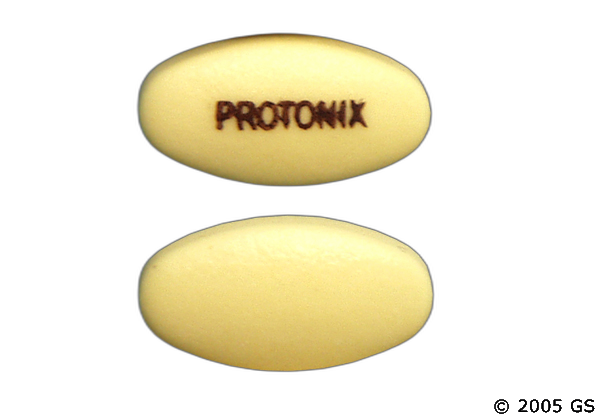
Protonix accumulates in the tubules of parietal cells of the stomach and
transforms into its active form that interacts with the H+-K+-ATP-ase.
Protonix inhibits this enzyme and prevents transfer of hydrogen ions
from the parietal cells into the stomach cavity this way blocking the
final stage of hydrochloric acid secretion. Protonix inhibits basal and
stimulated (regardless type of a stimuli - acetylcholine, histamine,
gastrin) secretion of hydrochloric acid. This medication is used to
treat acute stage of duodenal or gastric ulcers, including those caused
by treatment with anti-inflammatory non-steroid medications,
gastroesophageal reflux disease (moderate and severe); Zollinger-Ellison
syndrome, eradication of H. pylori in patients with a peptic ulcer to
reduce the frequency of relapses.
Dosage and directions
Take exactly as administered by your doctor. Usually for patients with
stomach or duodenum ulcers, gastroesophageal reflux disease Protonix is
recommended as 40 mg daily dose. Treatment continues mostly during four
weeks. Combined treatment with antibiotics (amoxicillin and
clarithromycin) directed eradicate H. pylori in patients with ulcers in
stomach and duodenum requires Protonix 40 mg daily divided in two doses:
take one tablet before breakfast and before supper, do not chew or
crash it, eat it whole with a glass of water. In case you purchased
Protonix oral granules take them mixed only with applesauce or apple
juice to make swallowing easy. Do not use any other type of liquid or
soft food for it. Do not crush, chew, or break a delayed-release tablet.
Precautions
Some conditions require longterm treatment with Protonix. This
medication is known to provoke cancer in animals but it was not tested
for cancer in humans. It also causes deficit of vitamin B-12. Symptoms
of a vitamin B-12 shortage may develop slowly and include pale skin,
weakness, tired feeling, shortness of breath, and a fast heart rate.
Discuss with your doctor if you are pregnant, plan to become pregnant or
breastfeeding as there is no evidence on influence of this drug on an
unborn baby.
Contraindications
Hypersensitivity, hepatitis and cirrhosis combined with severe liver failure.
Possible side effect
Most common side effects may appear as diarrhea, nausea, vomiting,
constipation, rash and headaches, dizziness, nervousness, abnormal
heartbeat, muscle pain, weakness, leg cramps and water retention.
Allergic reaction is also possible: hives, swelling of face and tongue,
rash.
Drug interaction
Protonix is able
to decrease pH-dependent absorption of ketoconazole and other
medications. Protonix also increases the absorption and concentration in
blood of digoxin (Lanoxin). This may lead to reduction of ketoconazole
effectiveness or increase of digoxin toxicity, respectively.
Missed dose
If you missed a dose take it the soonest. If it is almost time for your
next dose, just skip it and return to your regular dosage schedule.
Never double dose of this medication to compensate the missed dose.
Overdose
This medication is not expected to cause life threating side effect if
it was overdosed. If you suppose that took too much of it, seek for
immediate medical help.
Storage
Store at room temperature between 15-30 C (59-86 F) away from light and moisture, kids and pets.
Disclaimer
We provide only general information about medications which does not
cover all directions, possible drug integrations, or precautions.
Information at the site cannot be used for self-treatment and
self-diagnosis. Any specific instructions for a particular patient
should be agreed with your health care adviser or doctor in charge of
the case. We disclaim reliability of this information and mistakes it
could contain. We are not responsible for any direct, indirect, special
or other indirect damage as a result of any use of the information on
this site and also for consequences of self-treatment.