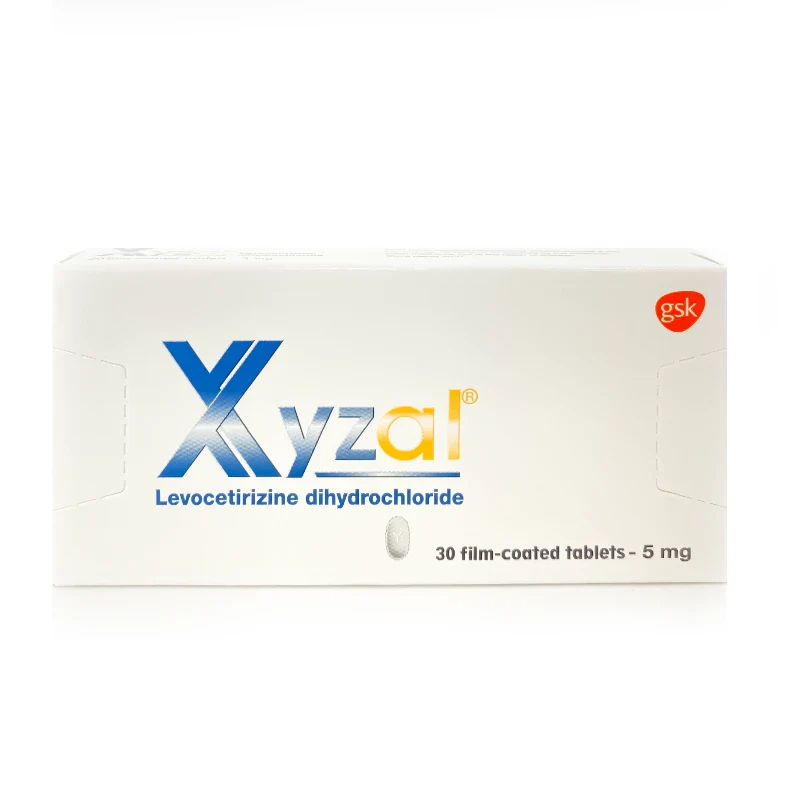
Xyzal is an antihistamine that reduces the effects of natural chemical
histamine in the body. Histamine can produce symptoms such as a runny
nose or hives. Xyzal is used to treat symptoms of year-round (perennial)
allergies in children who are at least 6 months old. Xyzal is also used
to treat itching and swelling caused by chronic urticaria (hives) in
adults and children who are at least 6 months old.
Dosage and direction
Take Xyzal exactly as prescribed by your doctor. Xyzal is usually taken in the evening, with or without food.
Do not give a child more than the prescribed dose of this medicine.
A child's body absorbs twice as much of the same dose size of
levocetirizine as an adult's body.
Usual Adult Dose for Urticaria: 5 mg orally once a day in the evening.
Usual Adult Dose for Allergic Rhinitis: Seasonal Allergic Rhinitis
(OTC): 5 mg orally once a day in the evening; some patients may be
adequately controlled on 2.5 mg once a day.
Precautions
Before taking Xyzal, tell your doctor if you have liver disease,
kidney disease, or gallbladder problems. Drinking alcohol with this
medicine can cause side effects.
Contraindications
You should not use Xyzal if you are allergic to levocetirizine or cetirizine (Zyrtec).
You should not take Xyzal if you have end-stage kidney disease or
if you are on dialysis. Any child younger than 12 years old with kidney
disease should not take levocetirizine.
Tell your doctor if you have ever had: kidney disease; liver
disease; urination problems (caused by conditions such as enlarged
prostate or spinal cord lesion); or gallbladder problems.
You should not breast-feed while using this medicine.
Xyzal is not approved for use by anyone younger than 6 months old.
Possible side effect
Get emergency medical help if you have signs of an allergic
reaction to Xyzal: hives; difficulty breathing; swelling of your face,
lips, tongue, or throat.
Stop using this medicine and call your doctor at once if you have:
worsening allergy or urticaria symptoms; painful or difficult urination;
little or no urination; a light-headed feeling, like you might pass
out; fever; or signs of an ear infection - ear pain or full feeling,
trouble hearing, drainage from the ear, fussiness in a child.
Common Xyzal side effects may include: drowsiness, tiredness; sinus
pain; ear infection; cough; fever; nosebleed; vomiting, diarrhea,
constipation; dry mouth; or weight gain.
Drug interaction
Using Xyzal with other drugs that make you drowsy can worsen this
effect. Ask your doctor before using opioid medication, a sleeping pill,
a muscle relaxer, or medicine for anxiety or seizures.
Tell your doctor about all your other medicines, especially: ritonavir; or theophylline.
Missed dose
Take the medicine as soon as you can, but skip the missed dose if
it is almost time for your next dose. Do not take two doses at one time.
Overdose
Seek emergency medical attention.
Storage
Store at room temperature away from moisture and heat, away from children and pets.